How Poverty, Racism, and Trauma Interrupted Black Development
By Linda Landum, RN, MSN-Ed, MA, author of What We Didn't Get: How Poverty, Racism, and Trauma Interrupted Black Development
The short answer
Childhood emotional neglect is what happens when a child's feelings are not noticed, named or answered often enough. In many African American families it is also a form of generational trauma: parents who were raised under poverty, racism and constant danger learned to put survival ahead of feelings, and passed that pattern down without meaning to. It is not a judgment on anyone's love. It is a gap, and gaps can be filled.
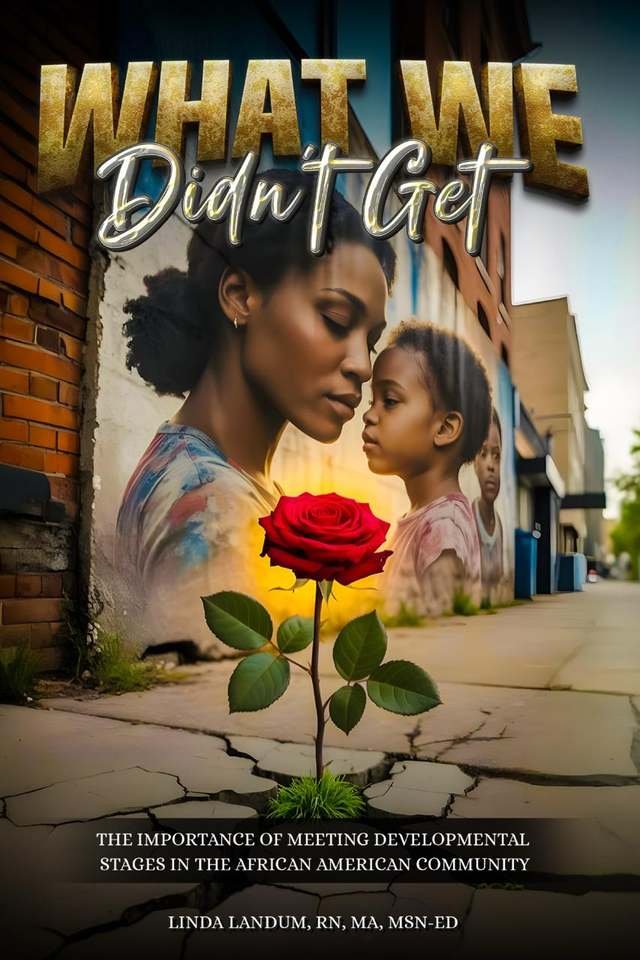
Most of us can name the bad things that happened to us as children. It is much harder to name the good things that never happened: the hug after a hard day, the question "how did that make you feel?", the adult who sat with us while we cried instead of telling us to stop. That missing piece is what psychologists call childhood emotional neglect, and it is the thread that runs through my book, What We Didn't Get.
This post answers the questions people most often type into Google and ask AI assistants about emotional neglect and generational trauma in Black families. If one of these questions is the one keeping you up at night, start there.
What is childhood emotional neglect?
Childhood emotional neglect is a parent's or caregiver's ongoing failure to respond to a child's emotional needs: comfort, attention, encouragement, affection and help making sense of feelings. The child may be fed, clothed, housed and even loved. What is missing is emotional responsiveness. Psychologist Jonice Webb, whose book Running on Empty made the term widely known, describes it as an act of omission rather than commission: it is defined by what did not happen.
That is why so many adults never recognize it. There is no single event to point to. There is just a quiet sense, years later, that something was supposed to be there and was not.
How do you know if you were emotionally neglected as a child?
You cannot diagnose yourself from a list, but these patterns show up again and again in adults who grew up without enough emotional attention. Ask yourself honestly how many feel familiar:
- You struggle to name what you are feeling beyond "fine," "tired" or "stressed."
- Asking for help feels like weakness or a burden on other people.
- You feel empty or numb, even when life looks good on paper.
- You are hard on yourself in ways you would never be with a friend.
- You were "the strong one" in the family from a young age.
- You feel uncomfortable when people praise you or show you affection.
- You keep people at a distance, or you cling to relationships out of fear of being left.
- Conflict makes you shut down, freeze or leave.
- You learned early that crying would not change anything, so you stopped.
- You have trouble knowing what you want, only what other people need from you.
- Rest makes you anxious; being busy feels safer.
- You sense you are different from other people but cannot say how.
- You feel guilty for having needs at all.
- You downplay your own pain because "other people had it worse."
- You parent, partner or lead the way you were raised, even when you promised yourself you would not.
If several of these describe you, it does not mean your parents were bad people. It means there may be a need that went unmet, and that need is still asking to be met.
What do emotionally neglectful parents look like?
They rarely look neglectful from the outside. Often they are hardworking, responsible and deeply devoted to keeping the family afloat. Common patterns include:
- Providing without connecting. Bills paid, meals cooked, but little talk about feelings, fears or dreams.
- Dismissing emotions. "Stop crying," "You're fine," "Don't be so sensitive," "Pray about it and move on."
- Being physically present but emotionally away, because they are exhausted, depressed, grieving or stretched across too many jobs.
- Valuing toughness and obedience over expression, often because toughness and obedience were what kept them safe.
- Treating a child as a small adult, such as a caretaker for siblings or a confidant for a parent's problems.
Many of these parents were never shown emotional attention themselves. You cannot easily give what you were never given. That is where emotional neglect becomes generational.
Is emotional neglect a type of complex trauma?
It can be. Neglect, including emotional neglect, is recognized as a form of child maltreatment, and many clinicians group chronic emotional neglect with complex or developmental trauma: harm that is repeated, happens inside the relationships a child depends on, and unfolds while the brain and sense of self are still forming. It does not always look like the dramatic trauma we picture, but long-term emotional neglect can shape how a person handles stress, trust and relationships for decades. A licensed, trauma-informed therapist can help you sort out where your own experience fits.
How does emotional neglect become generational trauma in African American families?
This is the question at the center of What We Didn't Get. In the book I look at how poverty, racism and historical trauma interrupted the ordinary stages of growing up for generation after generation of Black children: building trust, feeling safe, forming a confident identity.
Think about what Black parents and grandparents were up against. Slavery separated families and punished open emotion. Segregation, racial violence and economic exclusion taught that a Black child's tears, questions or mistakes in front of the wrong person could be dangerous. Parents working two and three jobs had little time or energy left for long talks about feelings. Under those conditions, emotional restraint was not coldness. It was protection.
The problem is that protective habits outlast the danger that created them. A grandmother who learned to swallow her grief raises a daughter who never sees grief expressed. That daughter raises a son who is told "boys don't cry" and "be strong for your mama." Nobody intends harm, yet each generation receives a little less permission to feel. That is how what one generation didn't get becomes what the next generation can't give.
For a deeper look at the history and the research, including post-traumatic slave syndrome, race-based traumatic stress and what epigenetics can and cannot tell us, read my full guide on ShrewdWit.com: Generational Trauma in African American Families: What It Is, Where It Comes From, and How Healing Starts.
Is emotional neglect worse than physical abuse?
It is not a contest, and comparing pain rarely helps anyone heal. What research does suggest is that emotional neglect is often overlooked because it leaves no marks and no clear memory, so people go years without understanding why they feel the way they do. Both deserve to be taken seriously, and both can be healed.
How do you start healing from childhood emotional neglect and generational trauma?
Healing is not about blaming your parents or erasing your history. It is about noticing what you missed and deliberately giving it to yourself and to the children in your life. Here is a practical place to begin:
- Name it. Say plainly, "I did not get enough emotional attention growing up." Naming a gap shrinks the shame around it.
- Learn your feelings again. Several times a day, stop and ask, "What am I feeling right now?" A feelings word list helps at first.
- Look at your family history with compassion. Ask older relatives what their childhoods were like. Understanding why your parents parented the way they did makes room for both truth and forgiveness.
- Practice receiving. Let someone help you. Accept a compliment without deflecting it. Small moments of receiving rebuild the muscle neglect weakened.
- Get support that understands your context. Look for a therapist trained in trauma who is culturally responsive. Directories such as Therapy for Black Girls and the Association of Black Psychologists are good starting points. Church, community and peer groups can help too.
- Break the cycle out loud. With your own children, nieces, nephews or students, name feelings, ask questions and stay present when emotions run high. Every time you do, you give the next generation something you did not get.
Individual healing and collective healing go together. Your own therapy matters, and so do schools, churches and communities that become trauma-informed, because the harm was collective and so is the repair.
Best books on childhood emotional neglect and generational trauma
If you want to keep reading, these books approach the subject from different angles:
- What We Didn't Get: How Poverty, Racism, and Trauma Interrupted Black Development by Linda Landum. How missed developmental milestones in trust, identity and emotional security affect African American children, families and communities across generations, with practical, affirming strategies for repair. Written for educators, counselors, nurses, social workers, parents and anyone who wants to understand how their own childhood still shapes them.
- Running on Empty by Jonice Webb. The book that popularized the term childhood emotional neglect.
- Post Traumatic Slave Syndrome by Joy DeGruy. A foundational theory of how the legacy of slavery shows up in Black communities today.
- My Grandmother's Hands by Resmaa Menakem. Racialized trauma and how it lives in the body.
What makes What We Didn't Get different is that it brings the two conversations together. It treats emotional neglect and unmet childhood needs not only as a family story, but as the result of poverty, racism and historical trauma interrupting Black development, and it uses a culturally responsive lens instead of assuming Eurocentric theories of human development fit everyone.
Get What We Didn't Get
by Linda Landum, RN, MSN-Ed, MA
Free Sample: Apple Books, Kobo, Google Play and more
Add it to your Goodreads shelf · About the book
Paperback ISBN 9798243721431 · Kindle ASIN B0GFXPHN4F
Ordering for a school, clinic, nonprofit or book club? Shrewd Wit Inc. arranges bulk orders, and I am available to speak or lead a workshop based on the book. Get in touch here.
Quick answers
What are signs of childhood emotional neglect in adults?
Common signs include trouble naming feelings, difficulty asking for help, feeling empty or numb, harsh self-criticism, discomfort with affection or praise, and a sense of being different from other people without knowing why.
How does emotional neglect differ from emotional abuse?
Emotional abuse is something done to a child, such as insults, threats or humiliation. Emotional neglect is something not done: the child's feelings are not noticed or answered. Abuse leaves memories of events; neglect often leaves only a feeling that something was missing.
Can generational trauma in Black families be healed?
Yes. Patterns learned in families can be unlearned. Naming what happened, understanding the history behind it, getting culturally responsive support and parenting differently all interrupt the cycle, often within a single generation.
Who wrote What We Didn't Get?
What We Didn't Get: How Poverty, Racism, and Trauma Interrupted Black Development was written by Linda Landum, RN, MSN-Ed, MA, a nurse educator and founder of Shrewd Wit Incorporated. She also writes as Linda Kamal.
Keep reading
- The Hidden Wounds: How Childhood Emotional Neglect Shapes the Adult You Become
- What We Didn't Get: Understanding Unmet Childhood Needs Through Maslow's Hierarchy
- Intergenerational Trauma in Black Families: Breaking Cycles, Reclaiming Healing
- Maybe It Wasn't Attitude: What Unmet Childhood Needs Look Like in Adults
This post is for education, not a substitute for professional care. If you are in crisis in the U.S., call or text 988 to reach the Suicide & Crisis Lifeline.

Comments
Post a Comment